UGC, or user generated content, is one of the fastest growing creator side hustles in Australia. You do not need a million followers, you do not need to be a brand ambassador, and you do not even need to post the videos to your own page. Brands and agencies pay you to film authentic looking content they then run as ads.
Pay rates have shot up. The standard going rate is around $150-$500 per video for newer creators and $1,000+ for experienced UGC creators with a track record. That is real income, and the ATO knows about it. Here is everything you need to know about tax as a UGC creator in Australia.
What Counts as UGC Income?
Any payment you receive in exchange for creating content for a brand or agency is taxable income. That includes:
- Per-video flat fees from direct brand deals
- Agency payments via UGC platforms (Insense, JoinBrands, BrandConnect, Beam, Billo, Twirl, Tribe etc.)
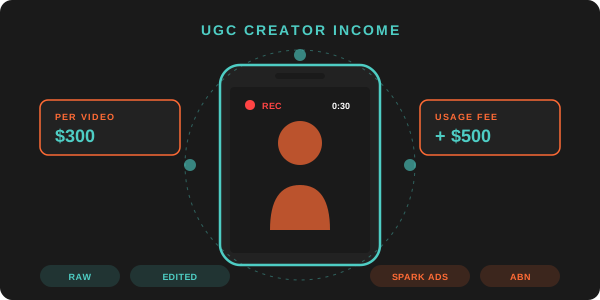
- Usage fees when a brand pays extra to run your video as a paid ad
- Whitelisting / Spark Ads revenue when a brand boosts your post through your handle
- Gifted products received in exchange for filming, at their market value
- Bonuses or revenue share tied to performance
- USD payments via Stripe, PayPal or Wise. Convert at the exchange rate on the day you received it.
UGC creators often think "I am not an influencer, I am just filming videos for a brand", and assume that means it is hobby income. It is not. The moment you accept payment for content with the intention to keep doing it, the ATO treats you as a business.
Do UGC Creators Need an ABN?
Yes, in almost every case. If you are creating UGC for paid clients with any kind of regularity, you are running a business. An ABN is free to register and takes about 10 minutes through the Australian Business Register.
If you do not have an ABN and you invoice an Australian brand or agency for more than $75 plus GST, the payer is required to withhold 47% of your fee and send it to the ATO. So a $500 invoice without an ABN gives you only $265. With an ABN, you get the full $500 and pay tax at year end based on your actual marginal rate. Full ABN guide here.
When Do UGC Creators Need to Register for GST?
You must register for GST when your UGC turnover exceeds $75,000 in any rolling 12 month period. Once registered:
- Add 10% GST to invoices for Australian clients
- Lodge a quarterly Business Activity Statement (BAS)
- Claim back GST on your business expenses
If your UGC clients are based overseas (US agencies are common), those payments are usually GST free as exports. But the income still counts toward your $75K threshold. Read our GST guide.
What Can UGC Creators Claim as Deductions?
This is where UGC gets very tax efficient. You film a lot, in a lot of different setups, and almost everything you buy to make the videos look good is deductible.
Recording equipment
- iPhone or smartphone (work portion)
- Tripods, ring lights, softboxes, LED panels
- Lavalier and shotgun microphones
- Action cameras and stabilisers
- Backdrops, props and sets
- Makeup and skincare specifically used for filming (not personal daily use)
Software and platforms
- CapCut Pro, Premiere Pro, Final Cut Pro
- Canva Pro for thumbnails and decks
- Stock music, sound effects and font subscriptions
- Cloud storage (iCloud, Dropbox, Google One)
- UGC platform subscription fees and commissions
Home studio costs
If you film from a dedicated space at home, you can claim a portion of rent / mortgage interest, electricity, internet and depreciation on the room's furniture. Home office deductions explained.
Phone and internet
The work-use portion of your monthly phone and internet bills. Most UGC creators end up at 30% to 60% work use depending on volume.
Other
- Travel to shoots, locations or supply runs (use a logbook for car claims)
- Bank and PayPal fees
- UGC course or coaching fees
- Accountant and bookkeeper fees
- Trademark / business name registration
How to Invoice Brands and Agencies as a UGC Creator
A proper invoice is your defence in an ATO audit and your best chance of getting paid on time. Every UGC invoice should include:
- The word "Tax Invoice" if GST registered (otherwise just "Invoice")
- Your name or business name
- Your ABN
- The brand / agency's name and ABN
- Date of issue and an invoice number
- A description of the work (e.g. "3 x UGC videos for [brand], 30s vertical, raw + edited")
- The amount, plus GST if applicable
- Your bank or payment details
- Payment terms (e.g. 14 days)
Save every invoice as a PDF in a dedicated folder. Cloud accounting tools like Xero, MYOB or Hnry generate these for you and track who has paid.
The Whitelisting / Spark Ads Trap
If a brand pays you extra to run your content as a paid ad through your TikTok or Instagram handle (whitelisting or Spark Ads), that fee is taxable income and should be invoiced separately. It is also potentially in scope for GST if you are registered, even though the brand is the one running the ad.
Many UGC creators forget to invoice for usage rights and let brands run their content on paid ads forever. Build a usage clause into every contract: e.g. "$X covers 3 months of paid usage on Meta and TikTok ads, additional usage to be invoiced separately."
Keeping Records as a UGC Creator
Because UGC creators usually have many small clients rather than a few big ones, record keeping is critical. The minimum:
- A separate bank account for UGC income and expenses
- Every invoice saved (sent and received)
- Every receipt photographed or emailed to a single inbox
- A simple spreadsheet (or Xero / Hnry) tracking income and expenses by month
- A logbook for any car travel you claim
The ATO requires you to keep these records for five years from the day you lodge. Record keeping guide.
Common UGC Tax Mistakes
- Treating it as a hobby. If you are paid and intend to keep doing it, it is a business. Declare it.
- Not declaring USD agency payments. The ATO data matches with PayPal, Stripe and Wise. They see it.
- Forgetting gifted products. The watch, the skincare bundle, the appliance — all taxable at market value.
- Mixing personal and UGC purchases on one card. Open a second card. Your accountant will love you.
- Forgetting to set aside tax. 30% of every payment to a separate "tax" account from day one.
UGC is one of the most deduction friendly creator income streams in Australia. The cost of producing the content is the cost of running the business, and almost all of it is claimable.
Need help with your UGC tax return?
We do tax for UGC creators every week. ABN setup, GST registration, deductions, invoicing systems, and your end of year return — all in one place.
Get Started Today