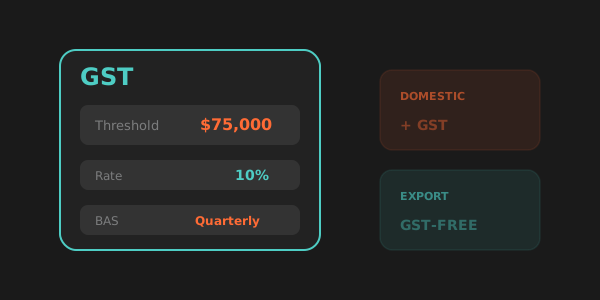
GST is one of those topics that most content creators ignore until it becomes a problem. You are focused on growing your audience, landing brand deals, and creating content. Tax compliance is not exactly top of mind. But if your creator income is growing, GST is something you need to understand, because getting it wrong can cost you thousands.
Here is a straightforward guide to GST for Australian content creators.
The $75,000 Threshold: When You Must Register
In Australia, you are required to register for GST when your gross business turnover reaches $75,000 or more in a 12-month period. This is not based on the financial year. It is a rolling 12-month calculation, which means you need to monitor your income continuously.
Your GST turnover includes all your creator income:
- Platform revenue from YouTube AdSense, Twitch subscriptions, OnlyFans, TikTok Creator Fund, and similar sources.
- Brand deals and sponsorships including both cash payments and the market value of gifted products you receive in exchange for promotion.
- Affiliate commissions from links and discount codes.
- Merchandise sales if you sell your own products.
- Coaching, courses, or digital products you sell to your audience.
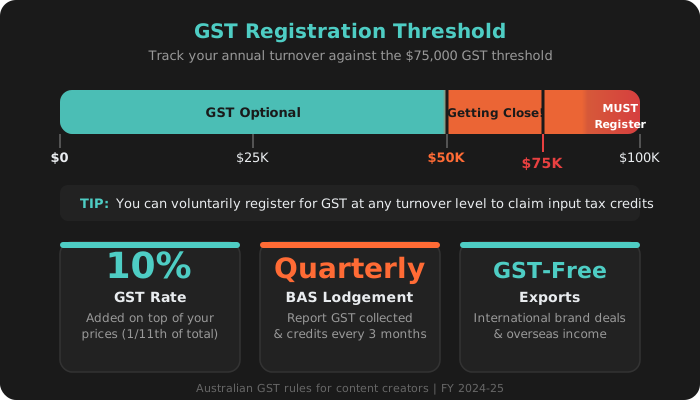
You can also voluntarily register for GST before hitting the threshold. This can be beneficial if you have significant business expenses, as it allows you to claim back the GST included in those purchases.
How GST Works for Creator Income
Once registered, the basic concept is simple: you collect GST on your taxable sales and remit it to the ATO, minus any GST credits you are entitled to on your business purchases.
However, creator income is not always straightforward. Here is what you need to know:
Domestic Income (Australian Clients)
If an Australian brand pays you $1,100 for a sponsored post, $100 of that is GST. You need to issue a tax invoice that shows the GST component, and you will remit that $100 to the ATO (less any GST credits you can claim on your expenses).
Foreign Currency and Overseas Platforms
This is where it gets interesting for creators. Most platform income comes from overseas companies. YouTube AdSense is paid by Google Ireland. OnlyFans payments come from the UK. Twitch pays from the US.
Income earned from providing services to overseas entities is generally classified as a GST-free export. This means you do not charge GST on this income. However, you still need to report it on your Business Activity Statement as GST-free sales. The good news is that you can still claim GST credits on your Australian business expenses, even though your income is GST-free.
When converting foreign currency income to Australian dollars, use the exchange rate at the time you receive the payment, or alternatively, use the average monthly rate published by the Reserve Bank of Australia.
BAS Lodgement Basics
Once you are registered for GST, you need to lodge a Business Activity Statement (BAS). Most sole trader creators lodge quarterly, though you can elect to lodge monthly if you prefer.
Q1 (July-September): due 28 October. Q2 (October-December): due 28 February. Q3 (January-March): due 28 April. Q4 (April-June): due 28 July. If you use a registered tax agent like CreatorTax, you may get extended lodgement dates.
Your total sales (including GST-free export income), GST collected on domestic sales, GST paid on business purchases, and your PAYG income tax instalment if applicable. The ATO will calculate whether you owe GST or are entitled to a refund.
If your turnover is under $10 million (which covers most creators), you can use the Simpler BAS method. This means you only need to report total sales, GST on sales, and GST on purchases. No need to break down different GST categories.
Common GST Mistakes Creators Make
We see these errors constantly when onboarding new creator clients. Avoid them and you will save yourself headaches and money.
- Not monitoring the $75k threshold. Many creators do not realise they have crossed the threshold until well after the fact. The ATO can backdate your registration and charge you GST on income earned since you should have registered. Monitor your rolling 12-month income regularly.
- Charging GST on overseas platform income. If you are invoicing or reporting GST on income from YouTube, Twitch, or OnlyFans (all overseas entities), you may be overcollecting. This income is generally GST-free as an export.
- Not claiming GST credits. If you are registered for GST, you can claim back the GST on your business expenses: equipment, software subscriptions, internet, phone, and professional services. Many creators forget to claim these credits and end up paying more GST than they should.
- Missing BAS deadlines. Late BAS lodgement attracts penalties and interest. Set calendar reminders or, better yet, let your accountant handle it.
- Mixing personal and business purchases. You can only claim GST credits on purchases that are genuinely for your business. Keep your business expenses separate and maintain proper records.
Should You Register Voluntarily?
If you are under the $75,000 threshold, you might still benefit from voluntary GST registration. Here is when it makes sense:
- You have significant business expenses. If you are buying cameras, computers, lighting, and other equipment, voluntary registration lets you claim back the GST on those purchases.
- You are approaching the threshold. If your income is growing fast, registering early avoids the scramble of backdating when you cross $75k.
- You want to appear more professional. Having a GST registration and issuing tax invoices can signal credibility to brands and business partners.
However, if most of your income is from overseas platforms (GST-free) and your expenses are low, voluntary registration might not be worth the extra compliance burden.
Need Help with GST Registration or BAS?
We handle GST registration, quarterly BAS lodgement, and all compliance for content creators. Let us take the stress out of it.
Get Started