Brand deals and sponsorships are one of the biggest income streams for Australian creators. Whether you are getting paid cash for a sponsored Instagram post, receiving free products to review on YouTube, or doing a contra deal with a brand in exchange for exposure, the ATO wants to know about all of it. And yes, all of it is taxable.
Here is a practical breakdown of how sponsorship and brand deal income works from a tax perspective, and what you need to get right to stay on the ATO's good side.
Cash Payments From Brand Deals
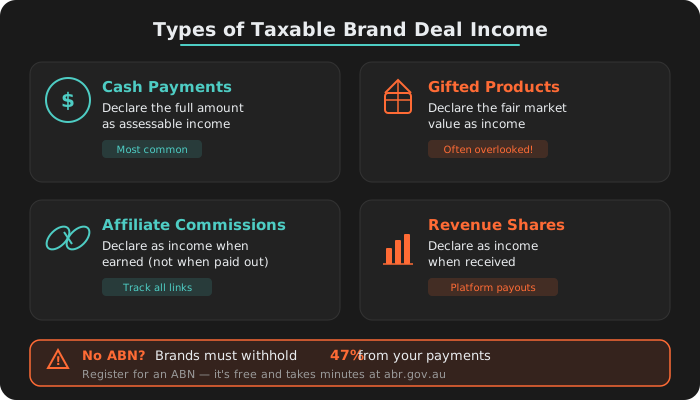
This is the most straightforward type of sponsorship income. A brand pays you a set fee to create content promoting their product or service. That payment is assessable income, and you need to include it in your tax return for the financial year you received it (or when it was invoiced, depending on your accounting method).
It does not matter whether the brand is Australian or international. If a US-based company pays you for a sponsored TikTok video, that income still needs to be declared to the ATO. Foreign income is taxable in Australia, and you may also need to deal with currency conversion records.
Gifted Products and Barter Income
This is where a lot of creators get caught out. If a brand sends you a product worth $500 in exchange for a post or review, that $500 worth of product is considered barter income (also called contra). The ATO treats it the same as if the brand paid you $500 in cash.
You need to declare the fair market value of the product as income. Fair market value is generally the retail price the product sells for at the time you received it. It does not matter that no cash hit your bank account. Income is income in the eyes of the ATO.
There is a grey area with unsolicited gifts, where a brand sends you a product without any agreement or expectation of promotion. In that case, it may not be assessable income. But the moment there is an understanding (written or implied) that you will create content in return, it becomes taxable.
Invoicing Brands: With and Without GST
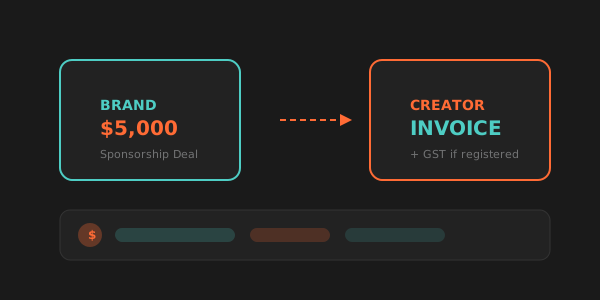
When a brand or agency books you for a deal, they will usually ask for an invoice. How you structure that invoice depends on your GST registration status:
- Not registered for GST: You issue a regular invoice with your ABN, the amount, and a description of the services. No GST is added. You cannot claim GST credits on your business expenses either.
- Registered for GST: You issue a tax invoice that includes 10% GST on top of your fee. If a brand agrees to pay you $1,000, your invoice should show $1,000 + $100 GST = $1,100 total. You then remit the GST component when you lodge your BAS.
Remember, GST registration is mandatory once your annual turnover hits $75,000. If you are doing multiple brand deals and your total business income is approaching that threshold, talk to your accountant sooner rather than later.
When Brands Withhold Tax: The No-ABN Rule
If you do not provide an ABN when invoicing a brand or talent agency, they are legally required to withhold 47% of your payment and send it to the ATO. This is known as the no-ABN withholding rule, and it catches a lot of newer creators off guard.
You can claim that withheld amount back when you lodge your tax return, but in the meantime, your cash flow takes a massive hit. The simple fix is to make sure you have an ABN and include it on every invoice. If you do not have one yet, read our guide on ABNs for content creators.
Declaring All Income, Including Contra Deals
The ATO expects you to declare every source of business income, not just the cash payments that show up in your bank account. This includes:
- Cash payments from brands and agencies
- Gifted products where there was an expectation of promotion
- Contra deals such as free hotel stays, flights, event tickets, or services received in exchange for content
- Affiliate commissions earned through brand partnerships
- Revenue shares or bonus payments tied to performance metrics
A common mistake is thinking that if it was not a bank transfer, it does not count. The ATO uses data matching across platforms and payment processors, and they are getting better at it every year. If a brand claims a marketing expense for paying you, the ATO can cross-reference that against your return.
Record Keeping for Sponsorships
Good record keeping is essential when dealing with brand income. For every deal, you should keep:
- The contract or agreement (even if it is just email confirmation)
- Your invoice and proof of payment received
- A record of the product's market value if it was a gifted or contra deal
- Screenshots or copies of the content you created as part of the deal
- Correspondence with the brand or agency outlining the terms
Keep these records for at least five years. If the ATO ever queries your income or deductions, having clear documentation makes the process much smoother.
Common Mistakes Creators Make
After working with hundreds of creators, here are the most common brand deal tax mistakes we see:
- Not declaring gifted products. If there was an arrangement, it is income. Full stop.
- Forgetting to include international payments. Overseas brand income is still taxable in Australia.
- Not keeping proper records. You need documentation for every deal, especially contra arrangements where there is no bank transaction to reference.
- Invoicing without an ABN. This triggers the 47% withholding rate and creates unnecessary cash flow problems.
- Mixing personal and business accounts. Brand deal payments should go into a dedicated business bank account to make tracking and reporting straightforward.
Need help with your brand deal income?
Our Chartered Accountants specialise in creator tax. We will make sure every deal is declared correctly and your deductions are maximised.
Get Started Today