
Instagram is one of the most popular platforms for Australian creators to earn a living, but when it comes to tax, most influencers have no idea where they stand. Whether you are getting paid for brand deals, receiving free products, or earning affiliate commissions, the ATO expects you to declare it all. Here is what you need to know.
Is Instagram Income Taxable in Australia?
Yes, all of it. If you are earning money or receiving anything of value through your Instagram account, it is assessable income and must be reported on your tax return. This applies whether you are a full-time influencer or someone who picks up the occasional paid partnership on the side.
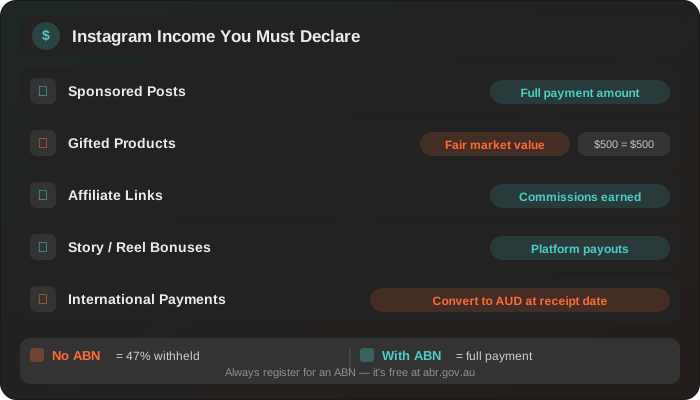
The ATO does not distinguish between income earned on Instagram versus any other platform. If money is coming in because of your content, it is taxable. The same applies to income earned from international brands or overseas affiliate programs. It does not matter where the money comes from. If you are an Australian tax resident, you pay tax on your worldwide income.
Brand Deal and Sponsorship Income
Brand deals are the bread and butter for most Instagram influencers, and they are treated as straightforward business income. When a brand pays you to create a post, a story, a reel, or any kind of content, that payment is fully taxable.
You need to keep records of every brand deal payment you receive, including invoices, contracts, and bank statements showing the deposits. If you are operating as a sole trader with an ABN, you should be issuing tax invoices for every deal. If a brand does not ask for your ABN, they may withhold 47% from your payment under the no-ABN withholding rules, which is a significant hit to your cash flow.
Gifted Products Count as Income
This is where many influencers get caught out. If a brand sends you a product for free in exchange for a post, story, or review, the ATO treats the market value of that product as barter income. You need to declare the fair market value of the item in your tax return, even though you never received cash.
For example, if a skincare brand sends you a package worth $500 in exchange for an Instagram story, you need to declare $500 as income. If you receive a designer handbag worth $3,000 in exchange for a series of posts, that $3,000 is taxable income. The key test is whether you received the product in exchange for something. If you did, it is assessable.
Products sent with no strings attached, where the brand genuinely expects nothing in return, may not be taxable. But in practice, if a brand is sending you products, they almost always expect exposure. Keep records of all gifted items and their estimated retail value.
Affiliate Commissions
Affiliate income from link-in-bio tools, swipe-up links, discount codes, and affiliate networks like LTK, Amazon Associates, or ShareASale is all taxable. These commissions are treated as business income and need to be declared, regardless of how small the amounts are.
Make sure you download your earnings reports from each affiliate platform at the end of the financial year. Some platforms issue payment summaries, but many do not, so it is your responsibility to track the income accurately.
Do You Need an ABN?
If you are regularly earning income from Instagram, the ATO almost certainly considers you to be running a business. That means you need an ABN. An ABN lets you invoice brands properly, avoid the 47% no-ABN withholding tax, and claim deductions against your income.
If your annual turnover exceeds $75,000, you also need to register for GST. Many influencers hit this threshold faster than they expect, especially once you factor in the value of gifted products alongside cash payments. If you are not sure whether you need an ABN, check out our guide on whether content creators need an ABN.
Tax Deductions for Instagram Influencers
The good news is that you can claim deductions for expenses directly related to earning your Instagram income. This is where having a proper business setup with an ABN really pays off. Common deductions for Instagrammers include:
- Phone and phone plan. The business-use percentage of your phone and monthly plan is deductible. If you use your phone 70% for content creation, you can claim 70% of the cost.
- Photography and video equipment. Cameras, lenses, tripods, ring lights, gimbals, and drones used for content creation. Items over $300 need to be depreciated over their useful life.
- Props and styling. Products purchased specifically for shoots, backdrops, styling items, and set dressing that you use in your content.
- Editing apps and software. Subscriptions to Lightroom, Photoshop, Canva, InShot, CapCut, Later, Planoly, and any other tools you use for editing or scheduling content.
- Home office expenses. If you create content, edit, or manage your business from home, you can claim a portion of your rent or mortgage interest, electricity, internet, and office furniture.
- Travel expenses. Flights, accommodation, meals, and transport costs for trips taken specifically to create content. This includes travel for brand events, press trips where you are creating content, and location shoots.
- Internet costs. The business-use percentage of your home internet plan.
- Professional services. Accountant fees, management commissions, legal costs, and any other professional fees related to your influencer business.
The golden rule is that you can only claim a deduction if the expense is directly related to earning your assessable income. Personal items, everyday clothing, and general living expenses are not deductible, even if they appear in your content. Keep receipts for everything and maintain a log of business versus personal use for shared expenses like your phone and internet.
How to Stay on Top of Your Tax Obligations
The biggest mistake Instagram influencers make is leaving everything to the last minute. Set up a system early in the financial year to track your income and expenses. Use a separate bank account for your business, save at least 25 to 30 percent of your income for tax, and keep digital copies of all receipts and contracts.
If you are earning significant income, consider lodging quarterly BAS statements (if registered for GST) and making voluntary tax payments throughout the year so you are not hit with a massive bill at tax time.
Ready to lodge your creator tax return?
CreatorTax is built by Chartered Accountants who specialise in influencer and creator tax returns. We will make sure you claim every deduction you are entitled to.
Get Started