
Podcasting in Australia has exploded, and if you are earning money from your show, the ATO expects you to declare that income and lodge a tax return. The good news is that podcasters can claim a wide range of deductions that significantly reduce what you owe. From microphones and software to hosting fees and home studio costs, here is everything Australian podcasters need to know about tax deductions.
Podcaster Income You Need to Declare
Before we get into deductions, it is important to understand that all income from your podcast is assessable. This includes:
- Sponsorships and ad reads. Any payment from brands for mentioning or promoting their product on your show, whether it is a flat fee or CPM-based deal, is taxable business income.
- Patreon and membership income. Monthly support from listeners through Patreon, Buy Me a Coffee, or similar platforms must be declared.
- Affiliate commissions. If you earn commissions from affiliate links you promote on your podcast or in show notes, that is assessable income.
- Live event revenue. Income from live podcast recordings, ticketed events, or meet-and-greets is business income.
- Merchandise sales. Revenue from selling branded merch related to your podcast must be declared, minus the cost of goods sold.
If you are earning regularly from any combination of these sources, the ATO considers you to be running a business. You should have an ABN and be lodging as a sole trader (or through a company structure if that suits your situation).
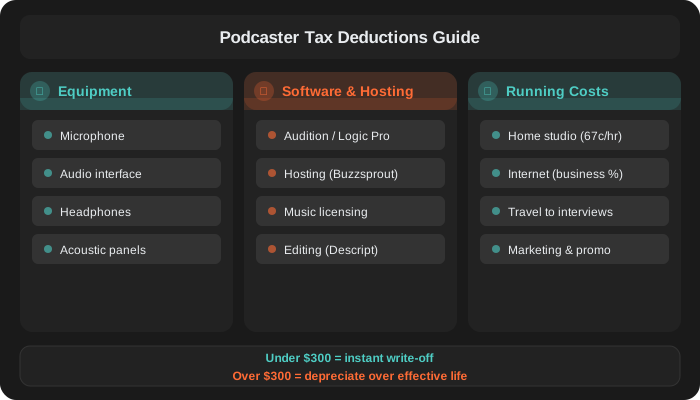
Microphone and Audio Equipment
Your recording setup is your most obvious deduction. Australian podcasters can claim:
- Microphones such as the Rode PodMic, Shure SM7B, or Audio-Technica AT2020
- Audio interfaces like the Focusrite Scarlett or Rode RODECaster
- Headphones used for monitoring and editing
- Accessories including pop filters, boom arms, shock mounts, and XLR cables
- Acoustic treatment such as foam panels, bass traps, and portable isolation shields
Items costing $300 or less can be claimed immediately. Anything over $300 needs to be depreciated over its effective life. A $600 microphone and interface bundle, for example, would be depreciated over several years rather than claimed in one hit.
Editing Software and Subscriptions
The software you use to record, edit, and produce your podcast is fully deductible. Common claims include:
- Adobe Audition (part of Creative Cloud subscription)
- Logic Pro for Mac-based editors
- Descript for AI-powered editing and transcription
- Hindenburg Journalist or Audacity (if using paid plugins)
- Canva Pro or design tools for creating episode artwork and social content
Monthly and annual software subscriptions are claimed in the financial year they are paid. If you pay for an annual plan that spans two financial years, you may need to apportion the cost.
Hosting and Distribution Fees
Your podcast hosting platform is a direct business expense and fully deductible. This includes fees for:
- Spotify for Podcasters (formerly Anchor)
- Buzzsprout
- Podbean
- Libsyn
- Transistor or any other hosting service you use
If you pay for premium analytics, dynamic ad insertion, or private podcast features, those upgraded plan costs are deductible too.
Home Studio and Office Deductions
Most podcasters record from home, which means you can claim home office deductions. The ATO offers two main methods:
The fixed rate method lets you claim 67 cents per hour for every hour spent recording, editing, planning, and managing your podcast from home. This covers electricity, internet, phone, and depreciation of office furniture in one rate.
If you have a dedicated recording space used exclusively for your podcast, you may be able to claim occupancy expenses such as a portion of your rent or mortgage interest, council rates, and home insurance. This method requires careful records but often results in a larger deduction for serious podcasters with a proper home studio.
Music Licensing
If you pay for licensed music for your intro, outro, or background tracks, those costs are deductible. This includes subscriptions to royalty-free music libraries like Epidemic Sound, Artlist, or Musicbed, as well as one-off track purchases from AudioJungle or similar marketplaces.
Guest Travel and Entertainment
If you travel to interview guests or attend events related to your podcast, you can claim travel expenses including transport, accommodation, and meals (within ATO limits). If you host in-person guests at a studio and cover their travel or meals, a portion of those costs may also be deductible, though entertainment expenses have strict rules. Keep detailed records and receipts for every trip.
Marketing, Promotion, and Website Costs
Growing your podcast audience costs money, and the ATO lets you claim it. Deductible marketing expenses include:
- Paid social media advertising on Instagram, Facebook, TikTok, or YouTube to promote episodes
- Website and domain costs for your podcast website, including hosting, domain registration, and any premium themes or plugins
- Email marketing tools like Mailchimp or ConvertKit used to build and engage your listener base
- PR and cross-promotion services if you pay to be featured on other shows or podcast directories
Professional Development and Accountant Fees
Courses, workshops, and conferences that help you improve your podcasting skills are deductible. This includes online courses on audio production, interviewing techniques, or podcast monetisation strategies. Industry events like podcast conferences also qualify if they relate directly to your work.
And yes, your accountant fees are deductible too. The cost of having a professional prepare your tax return, provide advice on sponsorship income, or help with BAS lodgement can all be claimed. It is one of the easiest deductions to overlook, but it adds up every year.
Record Keeping Is Everything
None of these deductions matter if you cannot prove them. The ATO requires you to keep records of every expense you claim, including receipts, invoices, and bank statements. You need to hold onto these records for five years from the date you lodge your return. Use a cloud accounting tool or even a simple spreadsheet to track your expenses throughout the year rather than scrambling at tax time.
Let us handle your podcast tax return
CreatorTax works with podcasters across Australia. We know what you can claim and we make sure you claim every dollar you are entitled to.
Get Started Today