This is one of the most googled questions we see from creators, and it makes sense. You start earning real money from TikTok, YouTube, OnlyFans, brand deals or Patreon, and the first thing you want to know is: how much of this is the ATO going to take?
The short answer: creators pay the same income tax rates as every other Australian. The longer answer involves brackets, deductions, the Medicare levy, GST, and PAYG instalments. Let us walk through it.
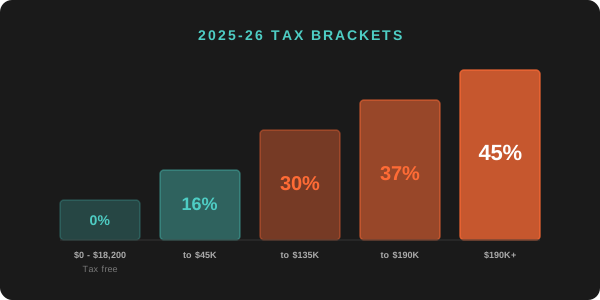
The 2025-26 Australian Tax Brackets
For the 2025-26 financial year (1 July 2025 to 30 June 2026), individual residents pay tax at the following rates:
| Taxable income | Tax on this income |
|---|---|
| $0 to $18,200 | Nil |
| $18,201 to $45,000 | 16c per $1 over $18,200 |
| $45,001 to $135,000 | $4,288 plus 30c per $1 over $45,000 |
| $135,001 to $190,000 | $31,288 plus 37c per $1 over $135,000 |
| $190,001 and over | $51,638 plus 45c per $1 over $190,000 |
On top of these rates, most Australians also pay the 2% Medicare levy. If you earn over roughly $97,000 (single) or $194,000 (family) and do not have private hospital cover, you may also pay the Medicare Levy Surcharge of 1% to 1.5%.
The Key Difference for Creators: Net Income, Not Gross
Here is where it gets interesting. As a content creator, you are almost certainly running a business, which means you only pay tax on your net income, not your gross income.
Net income is the money left over after you subtract all your legitimate business expenses. Things like:
- Camera, lighting, microphones and computer gear
- Editing software, hosting fees and domain names
- Phone and internet (work portion)
- Home office costs
- Travel for shoots, events, and content
- Agency commissions and platform fees
- Accountant and advisor fees
So if you earned $80,000 from your channel but spent $25,000 on equipment, software, travel and home office costs, you only pay tax on the $55,000 net.
This is the single biggest reason creators get burned at tax time. They calculate tax on their gross PayPal or Stripe deposits, panic, and either over save or under save. You only pay tax on profit. Track your expenses properly and the bill drops.
Real Examples: Three Creators, Three Tax Bills
Creator A: Side Hustle TikToker, $25,000 in creator income
Sarah works full time and earns $70,000 from her day job. She makes another $25,000 from TikTok Creator Fund, a few brand deals and affiliate links. After deducting $6,000 in legitimate expenses, her net creator profit is $19,000.
Her total taxable income is $89,000. Her creator income gets stacked on top of her salary at the 30% marginal bracket. The extra $19,000 of profit costs roughly $5,700 in tax, plus around $380 Medicare levy. So she should be setting aside about 32% of her net creator earnings.
Creator B: Full Time Sole Trader, $90,000 in creator income
Liam quit his job and creates full time. He earns $90,000 across YouTube AdSense, sponsorships and Patreon. After $22,000 in deductions (gear, home office, software, travel), his net profit is $68,000.
His tax bill is approximately $11,188 in income tax plus $1,360 Medicare levy. Total around $12,500, which is about 18.5% of his net profit. He should also be setting aside extra for super since no employer is paying it.
Creator C: Six Figure OnlyFans, $250,000 in creator income
Maddie earns $250,000 on OnlyFans. After $55,000 in genuine business deductions, her net profit is $195,000.
She pays roughly $54,138 income tax plus $3,900 Medicare levy. Total around $58,000, or about 30% of net profit. She is also over the GST threshold (more on that below) and should consider a company structure to cap her tax at 25%.
Don't Forget GST
If your creator turnover is over $75,000 in a 12 month period, you must register for GST. That means adding 10% GST to your invoices for Australian clients and lodging a quarterly Business Activity Statement (BAS).
The good news: you also claim back GST on your business expenses. The bad news: foreign income (US AdSense, OnlyFans, USD Stripe deposits) is GST free as an export, so you cannot collect GST on it but still count it toward the $75K threshold. Full GST guide here.
What About PAYG Instalments?
Once your creator income generates a tax bill above $1,000, the ATO will usually put you on the PAYG instalments system. That means quarterly prepayments of your estimated tax for the following year. It is not extra tax, just a way to spread it out so you do not get hit with one giant bill in October. Read our PAYG instalments guide.
Sole Trader vs Company: Different Tax Rates
If you operate as a sole trader, your creator profit is taxed at your personal marginal rates (up to 47% with Medicare).
If you run through a company, the company pays a flat 25% tax rate on profit (assuming it qualifies as a base rate entity), but you still need to draw the money out via salary or dividends, which gets taxed in your hands. Companies make sense once you are consistently earning over about $130,000 net and want to retain profits in the business. Detailed comparison here.
How to Estimate Your Tax Bill in 60 Seconds
- Add up your gross creator income for the year
- Subtract your total deductions to get net profit
- Add net profit to any salary income from a regular job
- Apply the bracket rates above
- Add 2% for Medicare levy
- Subtract any tax already withheld by your employer
Whatever is left is roughly what you owe. As a rule of thumb, set aside 30% of your net creator income in a separate savings account from the moment you start earning. You will almost always end up with leftover money, never a shortfall.
Tax should never be a surprise. The minute you start earning from your content, open a separate "tax" savings account and transfer 30% of every payment in. The day your bill arrives, you press one button and it is done.
Frequently Asked Questions
Do I pay tax on gifted products?
Yes. The ATO treats gifted products from brands as taxable income at their market value. More on why cash beats gifts every time.
What if I do not declare it?
The ATO data matches with banks, OnlyFans, Patreon, and even Instagram. Penalties go up to 75% of the unpaid tax plus interest. Full breakdown here.
Can I just use MyTax?
Technically yes. But MyTax does not understand depreciation, home office apportionment, foreign withholding credits, GST or content creator specific deductions. Most creators leave thousands on the table. Read whether you need an accountant.
Want a real number, not a guess?
Our Chartered Accountants specialise in creators. We will calculate exactly what you owe, find every deduction you can legally claim, and lodge it for you.
Get Started Today