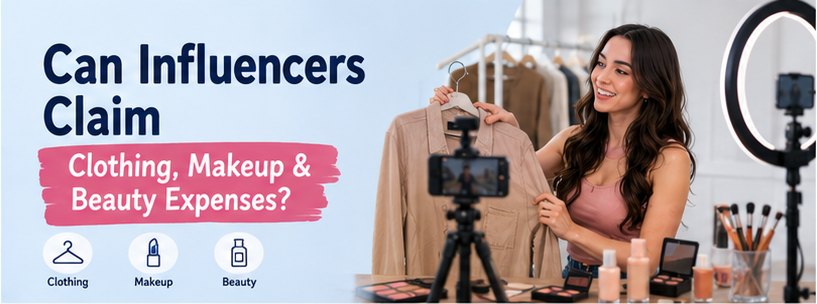
Influencer clothing, makeup and beauty tax deductions in Australia are tightly limited: the ATO treats conventional clothing, haircuts, makeup and grooming as private expenses, so they are usually not deductible even when bought purely for content. This guide explains the general rule, the narrow exceptions for genuine costumes and stage makeup, and how gifted PR products are taxed. It is one of the most misunderstood areas of influencer tax, and claiming the wrong things is a fast way to attract ATO attention.
Here is what you can and cannot claim when it comes to clothing, makeup and beauty as a content creator in Australia.
The General Rule: Conventional Clothing Is Not Deductible
The ATO's starting position is that conventional clothing is private, even if you only bought it for a shoot and would never wear it otherwise. Everyday clothes, shoes, activewear and outfits you feature in content are generally not deductible, because they are considered capable of private use.
This catches a lot of creators by surprise. The fact that an outfit was bought specifically for a brand collaboration, or that you feel you have to keep buying new clothes for content, does not change the ATO's view.
When Clothing Can Be Claimed
There are limited situations where clothing is deductible:
- Occupation-specific or protective clothing. Genuine costumes, branded uniforms with a logo, or protective gear used to earn income.
- Props and costumes that are clearly not everyday wear and are used to produce specific content (for example, a character costume for a skit).
- Branded uniforms with your business logo permanently attached.
If clothing is genuinely a prop or costume that has no realistic private use, you may have a claim. If it could plausibly be worn day to day, assume it cannot be claimed.
Makeup, Hair and Beauty
Makeup, haircuts, skincare, nails, cosmetic treatments and gym memberships are generally treated as private expenses, even for influencers whose appearance is central to their brand. The ATO considers grooming to be personal in nature.
There are narrow exceptions. A performer or content creator may be able to claim stage or photographic makeup that is specifically used for a production and is not part of normal daily grooming. The bar is high, and ordinary cosmetics you also wear in daily life will not qualify.
Gifted Clothing and PR Packages
If a brand sends you clothing or beauty products in exchange for posting about them, the market value of those products is assessable income. This surprises a lot of creators. The flip side is that gifts with no strings attached are treated differently. We cover this in detail in our guide to gifts vs cash payments.
Keep a simple log of PR you receive, including the brand, the product, its approximate retail value, and whether you were required to post in return.
How To Keep Records That Survive an Audit
- Keep receipts for everything you intend to claim.
- Note the business reason next to each purchase at the time.
- Photograph or save the content the item was used to produce.
- Be conservative. If an item has obvious private use, leave it off.
While clothing and beauty are mostly off limits, plenty of genuine business costs are claimable. Cameras, lighting, computers and other gear are deductible over time, which we explain in our guide to equipment depreciation for creators. When in doubt, get advice before you claim. The cost of a quick check is far smaller than an amended assessment and penalties later.
Frequently Asked Questions
Can influencers claim clothes on tax in Australia?
Generally no. The ATO treats conventional clothing as a private expense, even if it was bought purely for content or a brand deal. Only genuine costumes, protective clothing, or branded uniforms with a logo are typically deductible.
Can I claim makeup and haircuts as an influencer?
Usually not. Makeup, hair, skincare and grooming are treated as private. A narrow exception can apply to specialised stage or photographic makeup used only for a production, but everyday cosmetics you also wear personally are not deductible.
Do I pay tax on gifted clothing and PR products?
Usually yes. If you receive clothing or beauty products in exchange for posting or promoting, the market value of those products is assessable income and must be declared in your tax return. Genuinely unsolicited gifts with no obligation to post are treated differently. Keep a log of every PR item, its retail value, and whether a post was expected in return.
Claiming the right deductions, safely
We are Chartered Accountants who specialise in influencer and creator tax returns. We make sure you claim everything you are entitled to, without the audit risk.
Get Started Today Book a Free 15-Min Call